CET — ecosystem and mobile app
CET brings the digital card, benefits and youth opportunities into a mobile experience supported by a web and backend ecosystem. The public website, administration and app services connect through an architecture that supports product development and expansion.
My role: Development and integration of ecosystem components
Type
Professional
Technologies used
About the project
An ecosystem for the digital card and benefits
CET connects the public website, administration platform, backend services and European Youth Card mobile app. From explaining the programme to accessing the digital card and benefits, these components support a shared product journey.
Adoption in a production product
The mobile app serves more than 3,000 users within the CET ecosystem. This user base provides the practical context for development: straightforward access to the digital card, benefit discovery and communicating youth opportunities.
From administration to the mobile experience
The website and admin use Next.js, React and TypeScript. A NestJS backend manages product logic and MongoDB data, while the Flutter app with Riverpod presents a shared iOS and Android experience. APIs connect content administration with distribution to users.
Synchronisation that respects eligibility
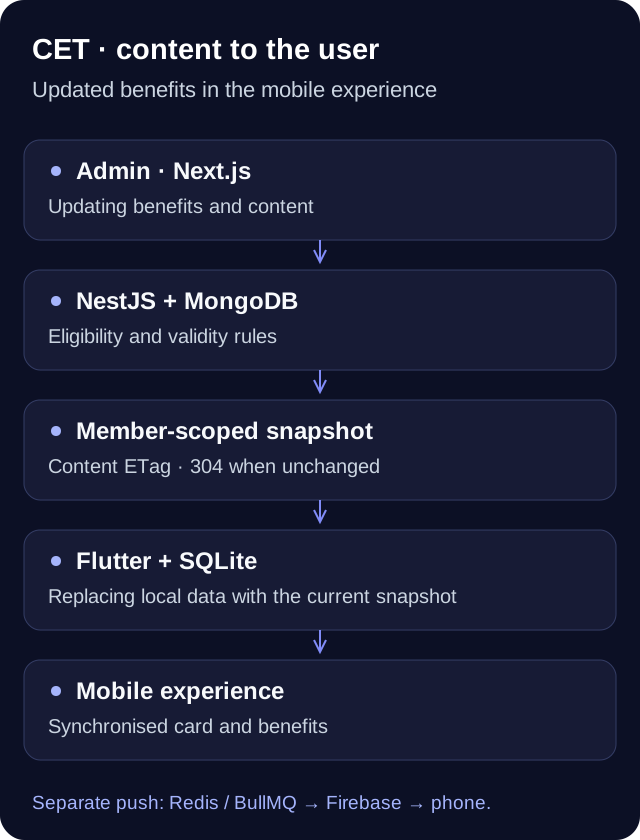
The API produces member-scoped snapshots that account for eligibility, validity periods and withdrawn content. Content-derived ETags enable a 304 response when data has not changed. The app stores synchronised information in SQLite so that locally available cards and benefits can be consulted when connectivity is unstable.
An example: updating a benefit
The team updates a benefit in the admin, the backend applies availability rules, and the next sync brings an updated snapshot to the phone. Withdrawn records are removed from the local copy. Separately, notifications can be scheduled and processed in the background through Redis and BullMQ, with Firebase push delivery.
Scalability with clear responsibilities
Separate web platforms, API and mobile app support independent component development. Worker-based notification processing and ETag content checks reduce repeated work in common workflows. The ecosystem can evolve alongside programme adoption and complexity.
Available on iOS and Android
Official App Store and Google Play links provide access to the app. The gallery shows the public website and mobile experience presentation page.
Architecture and workflow