DSS Transport — mobile app
The mobile component of the DSS ecosystem puts the transport workflow on the driver’s phone. It connects field activity with the admin platform and keeps relevant information locally to support continuity when connectivity is unreliable.
My role: Mobile development and DSS ecosystem integration
Type
Professional
Technologies used
About the project
Field operations connected to dispatch
The Flutter app puts assigned transports, equipment, checks and associated documents on the driver’s phone. Access and approvals are managed through the admin platform so that field activity follows the same rules as office operations.
Pre-departure checks
A 31-point checklist structures vehicle and trailer checks. Defects require photos, and issues are reviewed in the admin before the API permits departure. This connects observations in the field with a decision tracked in the system.
Local storage and durable synchronisation
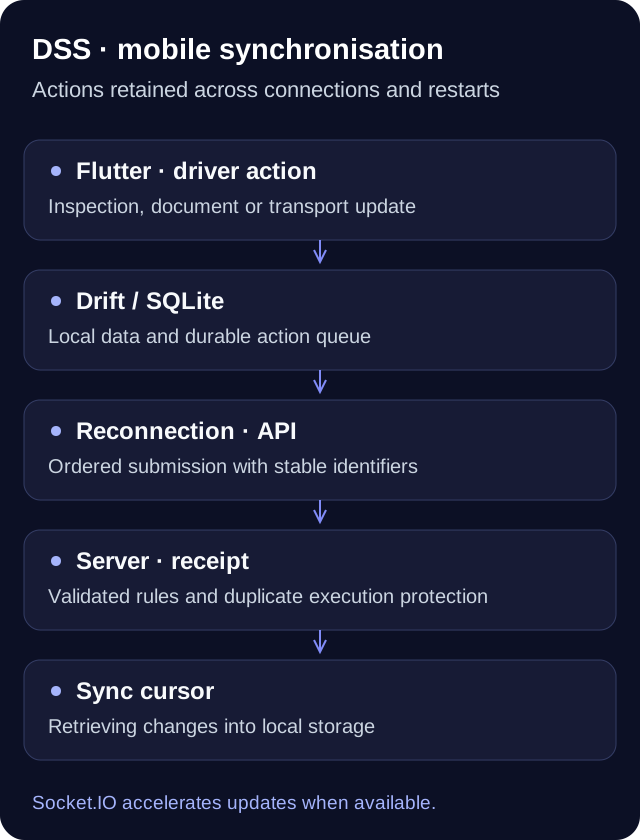
Drift and SQLite hold local data and a durable queue of actions awaiting synchronisation. Actions are retried in order after reconnection, using stable identifiers and processing receipts to prevent duplicate execution. The queue survives app restarts.
Recovering changes, including without realtime
The app retrieves server events using a sync cursor. Socket.IO announces available changes and accelerates updates; reconnecting to the API recovers data even when a realtime notification was missed. Departure rules remain validated on the server.
Documents from the phone to the admin
Drivers can photograph or select transport documents. Files are stored locally before submission, and photos are converted into PDFs on the server for access from the admin. Riverpod organises app state, while Dio handles communication with the ecosystem’s shared API.
Explore DSS Transport Ecosystem
Architecture and workflow