DSS Transport Ecosystem
DSS Transport connects office planning with field execution. The admin centralises transports, equipment, documents and checks, while the driver app uses the same rules and data. A shared API, mobile synchronisation and background services support continuity and expansion of the ecosystem.
My role: Architecture, full-stack development and ongoing maintenance
Started
Sep 2025
Type
Professional
Views
97
Technologies used
About the project
From shared files to operational coordination
I developed an ecosystem that gives dispatchers and drivers a shared view of operations. The admin platform centralises transport planning, equipment assignment, documents and checks. In current operations, the team uses the system to coordinate a fleet of 60 trailers and the activity of 40 drivers.
Operational rules enforced on the server
One example is the pre-departure check: a driver completes the checks in the app and attaches defect photos, while an administrator reviews and resolves issues. The API validates approval for the current transport and equipment before departure. Replacing equipment requires a new check while retaining the previous history.
Consistent data across admin and mobile
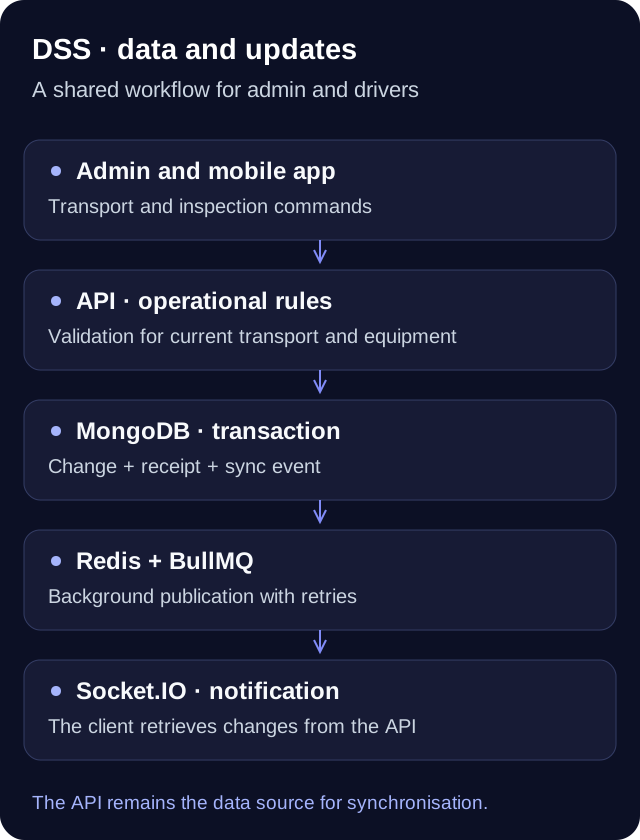
Transport commands use MongoDB transactions to keep the operational change, command receipt and sync event together. After the transaction commits, a BullMQ worker publishes a notification through Redis to the Socket.IO service. The app then retrieves changes from the API; realtime notifications accelerate synchronisation.
Documents within the operational workflow
Documents submitted by a driver are linked to the transport and made available to the admin team. Document photos can be converted into PDFs on the server, while stable upload identifiers prevent duplicates during retries. Inspection evidence is held in S3 storage with access controlled through the API.
Scalability through separate responsibilities
The Next.js and React interface, Node.js API, realtime service and workers have separate responsibilities. Background processing can be sized independently of the web interface, while retryable queues reduce reliance on immediate notification delivery. The architecture supports growing operational workloads and continuous feature development.
An evolving ecosystem
The collaboration covers architecture, full-stack development, maintenance and workflow improvements. The driver app has its own portfolio entry, detailing local storage and synchronisation under limited connectivity.
Explore the DSS Transport mobile app
Architecture and workflow